
What happens when a runner passes a teammate on the bases?
"Don't overtake on the base path!"
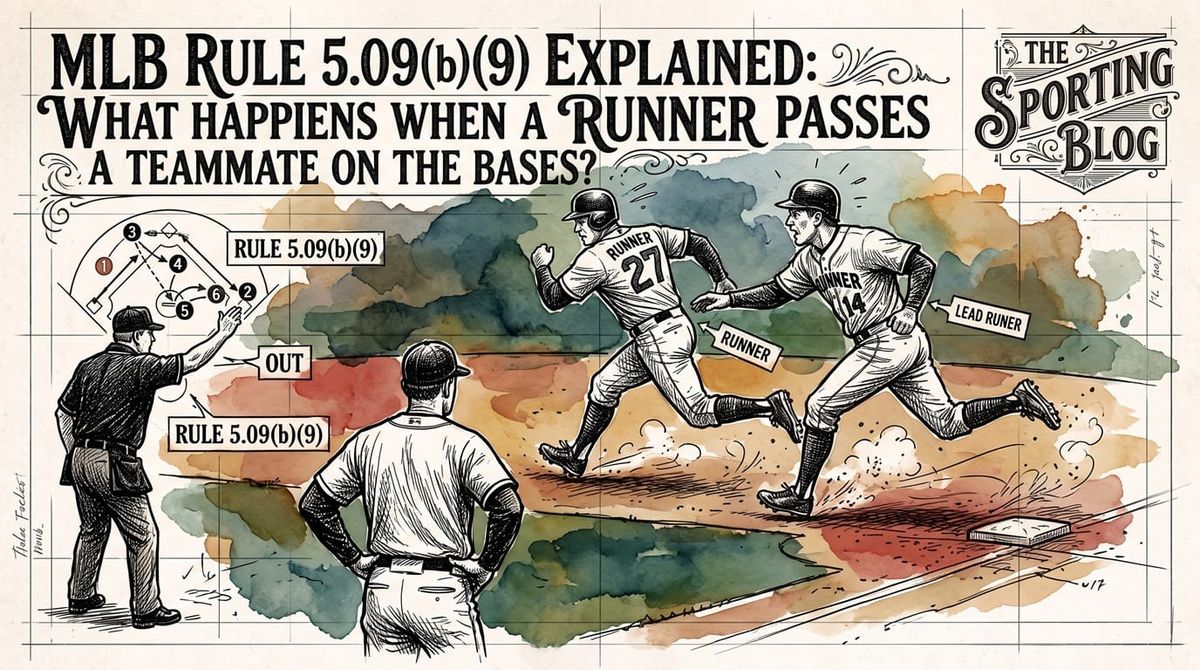
If a base runner passes a preceding teammate on the base path in Major League Baseball, the trailing runner is instantly declared out.
Under MLB Rule 5.09(b)(9), overtaking a lead runner triggers an immediate dead-to-rights penalty for the offender, but it does not kill the play. The ball remains completely live for every other runner on the diamond.
The Breakdown: MLB Rule 5.09(b)(9)
When confusion strikes between the bases—usually on deep fly balls where the lead runner retreats to tag up while the batter-runner charges forward—the rulebook offers zero leeway.
| Scenario Element | Official Ruling |
| Who is called out? | The trailing (passing) runner only. The lead runner is entirely unaffected and remains safe. |
| Status of the ball | Live. Defensive players can still make plays and record further outs on other runners. |
| Point of infraction | The moment the trailing runner physically passes the lead runner's position on the path. |
| Tag required? | No. The umpire will immediately signal an automatic out without the defense needing to apply a tag. |
How It Unfolds on the Base Paths
Picture a runner on first base tracking a deep drive to the right-center gap.
Uncertain if the ball will clear the wall, the lead runner holds up halfway or retreats toward first to tag. Meanwhile, the batter-runner—head down and sprinting—rounds first base and surges past their teammate.
The moment the batter-runner’s body crosses the lead runner’s plane, the umpire signals an immediate out on the batter. The original runner may still advance or retreat at their own risk because the ball stays live.
Passing a trailing teammate on the base paths results in an instant automatic out for the passing runner.


Comments ()