
Why do they sweep in Curling?
"What's the sweeping about?"
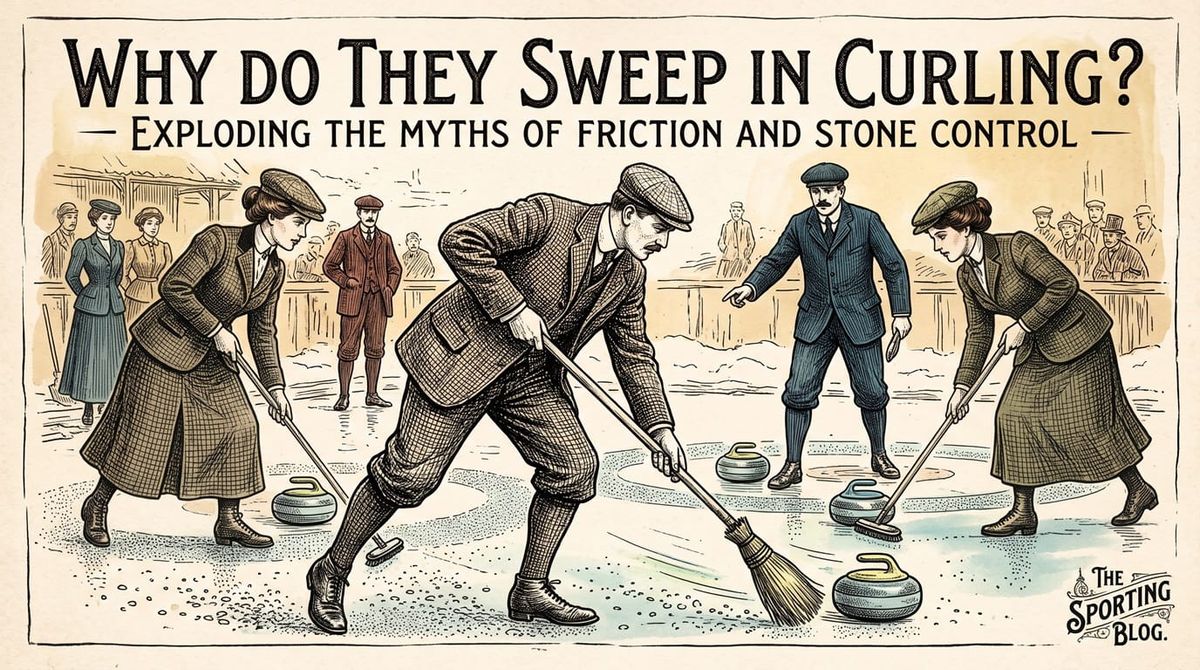
The sweeping effect in curling is not about clearing dirt; the movement causes a thermal reaction where rapid broom friction raises ice surface temperatures to melt a microscopic layer of water, drastically cutting drag.
Curling ice is never completely smooth. Technicians spray fine water droplets across the sheet to create "pebbled ice," forming thousands of tiny raised nodules that reduce the contact area of the stone.
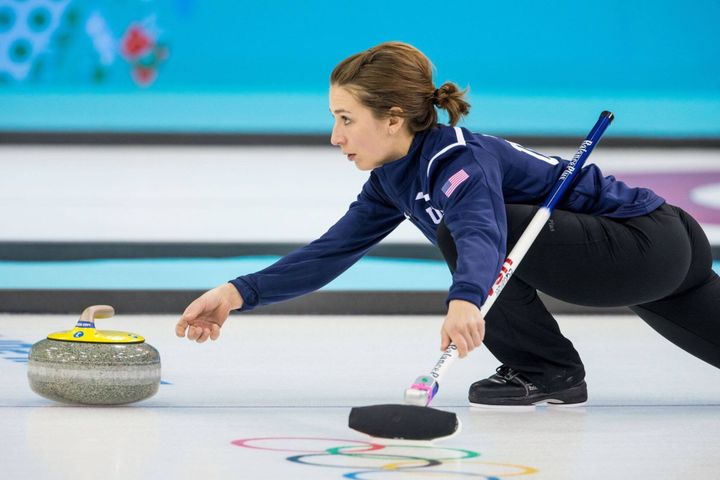
When sweepers attack the path ahead of a moving stone, their synthetic broom heads compress and rub against these pebble peaks at high frequency. That kinetic energy instantly converts to thermal energy.
The Physics of the Sweep
| Phase | Microscopic Action | On-Ice Impact |
| Broom Friction | Vigorous sweeping generates localized kinetic friction against pebble peaks. | Ice surface temperature rises by roughly 1°C to 2°C. |
| Micro-Melting | The localized heat momentarily melts the topmost layer of the ice pebble. | A microscopic film of liquid water forms beneath the stone's running band. |
| Hydrodynamic Lubrication | The liquid film acts as a lubricant, reducing kinetic friction. | The stone travels up to 3 to 5 metres farther and holds a straighter line. |
By managing where and how intensely they melt this microscopic film, sweepers control both the distance and the lateral curl of the 20-kilogram granite stone with pinpoint accuracy.
Sweeping in curling doesn't clean the ice—it actually melts the ice surface by 2°C to make the stone slide farther.

Comments ()