
Where Did it Go Wrong for Mike Ashley as Newcastle United Owner?
A look at Mike Ashley's time as Newcastle United owner - what really happened?
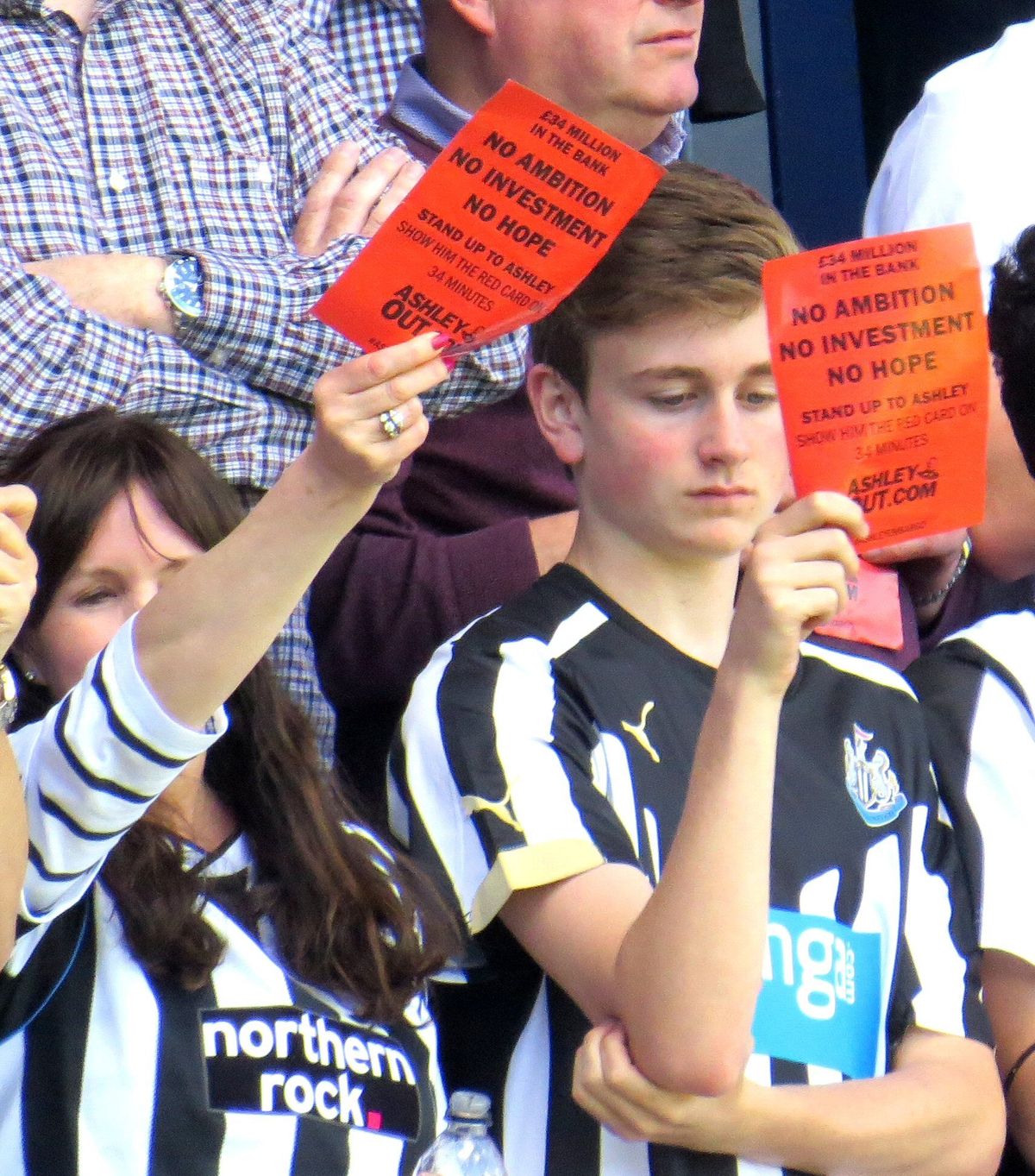
Mike Ashley and Newcastle United - Where did it all go wrong?
It has been 14 years since Mike Ashley first took over as Newcastle United owner. It is hard to believe now that when Ashley bought Newcastle in 2007, the takeover was actually popular with the Toon Army.
The Sports Direct owner promised to clear the club’s debts from the previous regime of Freddy Shepherd and aimed to make Newcastle United one of the most powerful teams in English football. In his first season as owner, he was often filmed drinking with the fans in the stands and pulled off a coup by bringing back club legend Kevin Keegan.
Since that time, a great deal has changed and a series of mistakes both on and off the pitch have led to two relegations in 2009 and 2016.
Prior to the Mike Ashley era, Newcastle were usually competing at the top end of the league table and secured European qualification on eight occasions between 1994 and 2007. Under Ashley they have largely been rooted to the bottom half of the table and have qualified for Europe just once in his fourteen years as owner.
The mood towards Mike Ashley has been vitriolic and after over a decade of stagnancy and a series of failed takeovers, Newcastle fans are crying out for a new owner to breath fresh life and ambition into the club.
Kurt Leyland takes a chronological look at where things went belly up for the big-bellied Mike Ashley, and his dreams of making the Toon one of the Premier League’s major players.
The Treatment of Kevin Keegan (2008)
When Mike Ashley became the owner, he inherited Sam Allardyce as the club’s manager. During the mid-point of the 2007-08 campaign, Newcastle fans become discontent with the form on the pitch and the style of football that they were playing under Sam Allardyce. As a result, Ashley made the bold move of sacking Allardyce and replacing him with club legend Kevin Keegan.
Anyone associated with Newcastle United knows that Kevin Keegan has hero status on Tyneside. As a player he was a hugely successful striker, captaining the side to promotion during the 1980s. As a manager, he transformed the Magpies from a team battling relegation in the second tier of English football and formed one of the most exciting teams in world football who were dubbed by the media as “The Entertainers.”
It was a dream move for the Newcastle fans to see Kevin Keegan back in the dugout and many hoped that the Toon would regain their status as the country’s “Entertainers.”
During his first six months back on Tyneside, Keegan was gradually getting the Magpies back to their best and record signing Michael Owen was finally beginning to show signs of living up to his £17 million price tag after scoring a Tyne-Wear derby double.
With the strike force of Owen, Martins and Viduka all beginning to play together, Newcastle ended the year in strong form and there was a great deal of optimism for Keegan’s first full season in charge with many fans excited to see the team King Kev would assemble.
During the summer of 2008, it soon became apparent that Kevin Keegan would not be the central figure in recruiting players to the football club. Mike Ashley appointed former Leeds United manager Dennis Wise to oversee transfers as the club’s Director of Football.
Over the course of the transfer window rumours of a rift between the two began to circulate. Kevin Keegan was feeling undermined by the hierarchy at Newcastle with Wise pulling the plug on the deals for Sami Hyppia and future Ballon D’or winner Luka Modric. Dennis Wise instead opted to sign the likes of Xisco and Gonzalez. Two players that Keegan himself admitted he had very little knowledge of.
Despite the tensions behind the scenes, Newcastle began the season well picking up a point against the champions Manchester United and followed that up with a victory against Bolton Wanders.
Late in the transfer window Newcastle sold star man James Milner to Aston Villa without consulting their manager and Kevin Keegan announced his resignation from the club as he felt undermined by the hierarchy at the club. This led to fan protests outside St James Park.
The First Relegation (2008-09)
The 2008-09 season was an unprecedented disaster for the Magpies both on and off the pitch with the club’s severe mismanagement consequently relegating them to The Championship after a seventeen year stay in the topflight.
A series of errors were made in the aftermath of Keegan’s departure. The first was the appointment of Joe Kinnear on an interim basis. Kinnear’s appointment seemed bizarre at the time as he hadn’t managed in the Premier League since he left Wimbledon in 1999 furthermore, he had been out of football management completely since 2004.
There was a great deal of scepticism surrounding the appointment when he arrived and the feud between the media and the new Newcastle boss began at Kinnear’s opening press conference at the club where he swore seventy times in his first ten-minute interview.
Kinnear struggled as Newcastle manager winning just four of his eighteen games as manager, during this time there was a great deal of disharmony in the dressing room. Kinnear notably fell out with French midfielder Charles N’Zogbia after he referred to him in an interview as Charles insomnia. With the French midfielder handing in a transfer request in the January transfer window and leaving alongside club legend Shay Given.
Despite the concerning first half of the season. The general view of Newcastle United like we had seen with Leeds in 2004 was that the club was simply too big to be relegated from The Championship. The Magpies were equipped with a number of big-name earners such as Michael Owen, Damien Duff, Obafemi Martins and Mark Viduka.
Kinnear left during the season after suffering from heart problems. This left the inexperienced Chris Hughton and Colin Calderwood in charge of a sinking ship. The pair were never officially given the job until the end of the season and each week a different named was shortlisted in the media as the potential successor. The Magpies struggled with the instability and were left on the brink of relegation.
In the final eight games, Alan Shearer was brought in to save the club from relegation but he failed to make any real impact at the club and won just one of his eight games in charge.
The Magpies had gone from playing Champions League football in 2004 to playing Championship football in 2009. Few elite Premier League clubs, other than Leeds United have had a quicker decline than the one the Magpies endured during Mike Ashley’s first two seasons at the club.
Stadium Name Change (2011-12)
Going into the 2009/10 campaign, following a mass exodus of big-name players, no permanent managerial appointment, no signings and a failed takeover. It was fair to say that the mood amongst fans was very pessimistic. Such dismay was further compounded by owner Mike Ashley’s decision to sell the naming rights for the stadium.
St James Park is a name synonymous with the history of Newcastle United. So seeing the stadium name being auctioned off was a massive insult to the fans of the football club. Few companies put forward an interest in the stadium rights due to the vitriolic reaction they would receive from Newcastle United fans. Most companies felt it would be a PR disaster.
Following promotion back to the Premier League, Mike Ashley changed the name of Newcastle United’s ground to The Sport’s Direct Arena in a bid to entice other businesses to bid for the naming rights. This caused outcry from the Newcastle United fan base. It was a universally unpopular decision and after just one season the name was changed back to St James Park.
Lack of Ambition and Missed Opportunities (2012)
Throughout Mike Ashley’s tenure as owner the overriding issue which has halted Newcastle United’s position in the league table has been a lack of drive and ambition to move the club forward.
Just two seasons after returning to the top-flight Newcastle United inspired by the signings of Yohan Cabaye, Demba Ba and Papiss Cisse defied the odds to finish 5th in the Premier League in 2012. This gave Newcastle European Football for the first time since Glenn Roeder was manager in 2007.
Such a tremendous performance in the league gave Newcastle a platform to attract a higher calibre of player to the club and rebuild their status as a European contender, fans felt that this would be a prime opportunity for the club to build on their success. In the summer of 2012 Newcastle failed to make many major deals in the summer this led to a difficult season in 2012-13.
In Europe Newcastle enjoyed a steady run and reached the Quarter Finals of the Europa League. Squad depth became a major issue in the league and Newcastle struggled to cope with injuries and the fixture congestion. The Magpies slumped to 16th position in The Premier League that year.
A lot of blame at that time was directed towards manager Alan Pardew who was struggling to regain momentum at the club. However, the driving force behind the problems at Newcastle United was the owner’s lack of ambition. Rather than pushing for further signings Newcastle instead became a club that was simply happy to just survive in the Premier League.
Since 2012, Newcastle United have managed just two top-half finishes and have largely been restricted to relegation battles at the foot of the Premier League.
The Second Relegation
As time progressed Newcastle United became increasingly content to settle for mid-table finishes and a series of frustrating seasons followed for Alan Pardew. Having become an unpopular figure in his final seasons at Newcastle Pardew made the decision to return to London and join Crystal Palace in January 2015.
Newcastle named Pardews assistant John Carver as the club’s permanent manager until the end of the campaign. This statement reflected the club’s complacency and their failure to appoint a more experienced manager resulted in a huge struggle.
At the midpoint of the 2014-15 season, Newcastle were in the top half of the table and a strong transfer window could have ensured a push up the league table. The Magpies went into free fall in the second half of the 2014/15 season winning just three of their final twenty league games and narrowly avoiding relegation on the last day of the season with a 3-1 victory over West Ham United.
After such a near miss from relegation, Mike Ashley had promised fans that he would invest every penny the club generates and would remain the owner of the club until Newcastle reached the Champions League or lifted a major trophy.
After such a bold statement in the media Newcastle United were expecting a big change. Newcastle eventually appointed the recently sacked manager of Championship side, Derby County Steve McLaren.
Throughout the 2015/16 season, a Newcastle side that had the likes of Florian Thauvin, Gini Wijnaldum and Moussa Sissoko were rooted to the relegation places and struggled for form for large periods of the season. The tenure of McLaren was a failure for Newcastle United with the Magpies leaking goals throughout the season. McLaren was sacked in March 2016 with the Magpies in the bottom three and with a lot of ground to make up.
New manager Rafael Benitez was given the task of trying to save the club from relegation and despite ending the season seven games undefeated the Magpies upturn in form was too late to save them from relegation.
The Treatment of Rafael Benitez (2016-19)
When Newcastle United made the appointment of Rafa Benitez fans were excited as they finally felt they had a figure who had the potential to build the team in the years to come. In his first full season at the club the Spaniard helped the Magpies to the Championship title.
On their return to the Premier League there was minimal investment for Benitez and during this period he often criticised the hierarchy for the lack of investment both in the training facilities and in his transfer budget.
Despite the constraints at Newcastle United, Benitez was able to comfortably beat relegation finishing in 10th and 13th in his two seasons in The Premier League. Most importantly Benitez had created structure in the defence, something that the Magpies had struggled with in years gone by particularly during McLaren’s era as manager.
As with the summer of 2012, the failure to back a manager of Benitez’s calibre and give him the tools to take the club forward was a hugely frustrating sight for Newcastle United fans. Losing him in the summer of 2019 proved to be a watershed moment, from which the club is still struggling to recover from.
The Current Situation (Early in 2021)
Following Benitez’s departure in the summer of 2019. Newcastle United have been the subject of two takeover sagas, both of which have failed to materialise.
Steve Bruce was appointed to replace Benitez in 2019. The appointment was met with scepticism from the Newcastle fans due to his previous career relegations with Hull and Birmingham. This compounded with the failed takeover created a great sense of negativity and many pundits tipped Newcastle for relegation in the 2019-20 season.
Bruce enjoyed a steady first season in charge of the club in terms of results, however, it proved to be a hard season with Martin Dubravka making more saves than any other topflight keeper. Newcastle had struggled to show authority in games under Steve Bruce and his second season at Newcastle United has been a huge struggle.
In the last seven months, the Magpies have managed just seven victories and lay precariously close to the relegation places in 17th place.
Bruce is in a huge relegation fight and will have to get through it without a host of the club’s best hitters following key injuries to midfielders the likes of Miguel Almiron and Allan Saint-Maximin. The Magpies will also be without their talisman Callum Wilson for the next month of fixtures. Steve Bruce will need to rely on the likes of Dwight Gayle and Ryan Fraser to step up to the mark in the coming weeks if Newcastle are to avoid a third relegation under Mike Ashley’s ownership.
Comments ()