
English Football Stadiums: History and Legacy
A summary of all English football stadiums in the Premier League, EFL Championship, EFL League One and EFL League Two.
A Detailed Summary of All English Football Stadiums in the Premier League, EFL Championship, EFL League One and EFL League Two
Football stadiums are more than just playing fields - they’re cultural centres for football fans, players and communities.
We’ve created a detailed overview of English football stadiums, including each stadium’s history, teams and lasting legacy.
I. Introduction: The Hallowed Grounds of English Football
The Enduring Significance of Football Stadiums
Football stadiums are far more than mere playing fields; they stand as cultural epicentres, bastions of community identity and theatres where the rich drama of human emotion unfolds.
Their architectural evolution, from the rudimentary enclosures of the late 19th century to the sophisticated, multi-functional arenas of the 21st century, mirrors the trajectory of football itself, as well as England’s broader societal and technological advancements.
These structures are not just backdrops to the game; they are integral characters in the enduring narrative of English football.
Scope and Structure of the Report
This report will cover the stadiums of clubs participating in the top four tiers of the English football league system for the 2024-25 season. These tiers include:
- Premier League
- EFL Championship
- EFL League One
- EFL League Two
Each league-specific section will present individual entries for each club's home ground. We will look at the stadium's official name (including notable former or sponsored names where available), its geographical location, current spectator capacity and the year it was first built or officially opened (or, in some cases, when the current club began its occupancy).
Each entry will also provide a concise narrative that explores the stadium's unique history and key factual highlights, drawing upon all available information.
Overarching Themes in English Stadium History
Several dominant themes emerge when examining the historical development of English football grounds. These themes not only illustrate architectural trends, but also reflect significant shifts in the sport's regulation, commercialisation and social impact.
The Legacy of Archibald Leitch
The early 20th century saw the rise of Archibald Leitch as a pre-eminent stadium architect. His designs shaped many of English football's most iconic grounds, including significant work at venues like Old Trafford, Stamford Bridge, Villa Park, Goodison Park, Ewood Park and Fratton Park.
The prevalence of Leitch's work underscores a critical period in football's professionalisation, and its burgeoning status as a mass spectator sport.
As clubs grew and attracted larger followings, the necessity for more permanent and capacious facilities became paramount. Leitch was instrumental in meeting this demand.
His architectural style, often characterised by functional two-tiered stands and distinctive criss-cross steelwork on balconies, became a defining feature of British football grounds for decades, creating a shared architectural heritage across the nation.
The Taylor Report and the All-Seater Revolution
The Hillsborough disaster in 1989 was a watershed moment, leading to Lord Justice Taylor's report. This report mandated that clubs in the top two divisions convert their stadiums to all-seater venues. This had a transformative impact on the landscape of English football grounds.
Many historic stadiums underwent extensive renovations (such as Portman Road, Carrow Road, Fratton Park and Deepdale). This resulted in reduced initial capacities due to the removal of standing terraces.
In other instances, clubs opted for entirely new stadium constructions to comply with the new safety standards and requirements. This era fundamentally reshaped the matchday experience. It prioritised safety and altered the traditional atmosphere associated with standing areas. It would influence stadium economics and design philosophy for decades to come.
The New Millennium: Modern Arenas and Relocations
From the late 1990s onwards, a discernible trend emerged: clubs, particularly those achieving promotion or with new investment, began moving to new, often out-of-town or edge-of-town, multi-purpose stadiums.
This movement was driven by a confluence of factors, including the limitations of redeveloping historic, inner-city grounds constrained by surrounding urbanisation, and the allure of enhanced commercial opportunities.
These modern arenas, such as Arsenal's Emirates Stadium, Manchester City's Etihad Stadium and Leicester City's King Power Stadium, were designed not just as sporting venues but as revenue-generating assets. They were equipped with extensive corporate hospitality suites, conferencing facilities, retail outlets and improved accessibility.
This trend reflects the increasing commercialisation of football, where the stadium itself becomes a central pillar of a club's business model, designed to maximise diverse revenue streams far beyond traditional ticket sales.
II. Premier League Stadiums: The Pinnacle of English Football
The Premier League, established in 1992 (its predecessor, the English First Division, has a much longer history), represents the apex of English football. It features globally recognised clubs and some of the most iconic football venues in the world.
This tier has a mix of venerable old grounds, extensively modernised over the years, and brand-new, state-of-the-art arenas built in the 21st century. Let’s take a look.
Arsenal - Emirates Stadium
- Club: Arsenal
- Location: Holloway, London
- Capacity: 60,704
- Year Opened: 2006
- History and Key Facts: After 93 years at their historic Highbury ground, Arsenal relocated a short distance to the state-of-the-art Emirates Stadium. The move was necessitated by the fact that Highbury's capacity of 38,000 was limited by its location, and expansion possibilities had been exhausted. The club identified the Ashburton Grove site in 2000, secured planning approval in 2002, and construction officially commenced in February 2004. The stadium was completed in just two and a half years, opening with Dennis Bergkamp's testimonial match against Ajax on July 22, 2006. Beyond club football, the Emirates Stadium has hosted international fixtures and was a venue for football matches during the 2012 London Olympics.
Aston Villa - Villa Park
- Club: Aston Villa
- Location: Aston, Birmingham
- Capacity: 42,918
- Year Opened: 1897
- History and Key Facts: Villa Park has been the proud home of Aston Villa since 1897. Built on the former Aston Lower Grounds, it holds the distinction of being one of a select few stadiums worldwide to have staged international fixtures across three different centuries, with the first senior international taking place in 1899. For many years, it was a regular venue for FA Cup semi-finals, before these matches were predominantly moved to Wembley Stadium. The original stadium could house 40,000 spectators, mostly standing. Aston Villa has ambitious plans to redevelop the North Stand, which would increase Villa Park's capacity to over 50,000.
AFC Bournemouth - Vitality Stadium
- Club: AFC Bournemouth
- Location: Bournemouth, Dorset
- Capacity: 11,307
- Year Built: 1910
- History and Key Facts: Originally known as Dean Court, Vitality Stadium has been Bournemouth's home since its construction in 1910. The ground underwent a complete rebuild in 2001 and further significant renovations in 2013 to bring it up to modern standards. Despite its current modest all-seater capacity, the stadium witnessed a record attendance of 28,799 on March 2, 1957, during an FA Cup tie against Manchester United, a testament to its historical standing capacity. The club has announced intentions to further modernise and expand Vitality Stadium.
Brentford - Gtech Community Stadium
- Club: Brentford
- Location: Brentford, London
- Capacity: 17,250
- Year Opened: 2020
- History and Key Facts: The Gtech Community Stadium officially opened on September 1, 2020, replacing the club's historic Griffin Park. The project, which had been in discussion since 2002, saw groundbreaking in March 2017 and main works in Spring 2018. The stadium is a central piece of a wider regeneration project for the Lionel Road area, including new homes and commercial opportunities. Designed by AFL Architects, the stadium cost approximately £71 million and features a Desso Grassmaster hybrid pitch. Notably, in the Summer of 2022, the entire West Stand and the northeast corner were converted to rail-seating to allow for safe standing, reflecting a progressive approach to fan experience.
Brighton & Hove Albion - American Express Stadium (Amex Stadium)
- Club: Brighton & Hove Albion
- Location: Falmer, Brighton and Hove
- Capacity: 31,876
- Year Opened: 2011
- History and Key Facts: The American Express Stadium, often referred to as the Amex, opened in July 2011. It provided Brighton & Hove Albion with a permanent, modern home after a period at the temporary Withdean Stadium. The initial capacity was 22,500, but high demand for tickets following the club's rise led to an expansion in 2013, increasing the seating to its current figure. The stadium has hosted Premier League football since Albion's promotion in 2017. It has also welcomed international sports, including two matches during the men's Rugby World Cup in 2015. Its record attendance of 31,752 was set in October 2023 against Liverpool.
Burnley - Turf Moor
- Club: Burnley
- Location: Burnley, Lancashire
- Capacity: 21,994
- Year Opened: 1883
- History and Key Facts: Turf Moor is one of the oldest continuously used professional football grounds in the world, hosting Burnley FC since 1883. The first match was against Rawtenstall on February 17, 1883. The stadium had a record attendance of 54,775 in 1924 for a match against Huddersfield Town. While it has undergone various modernisations, Turf Moor retains a traditional character, nestled within the town.
Chelsea - Stamford Bridge
- Club: Chelsea
- Location: Fulham, London
- Capacity: 40,173 (other sources suggest up to 41,841)
- Year Opened: 1877 (Chelsea FC formed and occupied in 1905)
- History and Key Facts: Stamford Bridge was originally opened in 1877 as a venue for the London Athletic Club. In 1904, after an ownership change, it was offered to Fulham FC, who declined. Consequently, the owners decided to form their own football club, Chelsea FC, which started playing at Stamford Bridge in 1905. The stadium underwent extensive reconstruction between 1994 and 2001. This transformed it into a modern all-seater venue. While its current capacity hovers around 40,000-41,000, Stamford Bridge once held significantly larger crowds, with a record attendance of 82,905 for a match against Arsenal on October 12, 1935.
Crystal Palace - Selhurst Park
- Club: Crystal Palace
- Location: Selhurst, London
- Capacity: 25,194 (Transfermarkt lists 25,486)
- Year Opened: 1924
- History and Key Facts: Selhurst Park, designed by the renowned Scottish architect Archibald Leitch, opened on August 30, 1924, with Crystal Palace losing 0-1 to The Wednesday in front of 25,000 fans. The site, a former brickfield, was purchased in 1922. Over the years, Selhurst Park has also served as a temporary home for Charlton Athletic (1985–1991) and Wimbledon (1991–2003). The stadium also hosted games for the 1948 Summer Olympics. There are ambitious plans to redevelop the Main Stand into a new three-tier structure, inspired by the original Crystal Palace, which would increase the overall stadium capacity to around 34,000.
Everton - Goodison Park
- Club: Everton
- Location: Walton, Liverpool
- Capacity: 39,414
- Year Opened: 1892
- History and Key Facts: Goodison Park has been Everton's home since its completion on August 24, 1892, making it one of the world's oldest purpose-built football grounds. Everton moved to Goodison after a dispute over rent at Anfield, their previous ground. Many of Goodison Park's stands, including the double-decker Goodison Road Stand (1909), were designed by Archibald Leitch. The stadium hosted matches during the 1966 FIFA World Cup. Its highest attendance was 78,299 for a match against Liverpool on September 18, 1948. Everton are scheduled to move to a new stadium at Bramley-Moore Dock in 2025.
Fulham - Craven Cottage
- Club: Fulham
- Location: Fulham, London
- Capacity: 24,500 (Transfermarkt indicates 29,589, likely reflecting recent Riverside Stand development)
- Year Opened: 1896 (as a stadium, original cottage on site from 1780)
- History and Key Facts: Fulham Football Club has played at Craven Cottage since 1896, making it one of London's most historic football venues. The site itself has a longer history, with the original Craven Cottage, a royal hunting lodge, built in 1780. The ground is famed for the "Johnny Haynes Stand" (formerly the Stevenage Road Stand), an Archibald Leitch design and a Grade II listed building. The actual "Cottage" pavilion is in one corner of the venue. A plane tree survives within the Putney End, the only such tree in any British senior football stadium. Fulham were the last Premier League club to have standing accommodation, which remained until the 2001-02 season. The stadium’s record attendance is 49,335, set in 1938 against Millwall. The recently redeveloped Riverside Stand has significantly modernised facilities and increased capacity.
Leeds United - Elland Road
- Club: Leeds United
- Location: Leeds, West Yorkshire
- Capacity: 37,608 (Transfermarkt lists 37,890)
- Year Opened: 1897 (Leeds United's home since 1919)
- History and Key Facts: Elland Road was built in 1897 and has been the home of Leeds United since the club's formation in 1919. The ground, originally known as the Old Peacock Ground, is dominated by the imposing East Stand, which opened in the 1992-93 season and holds around 15,000 supporters. Elland Road has witnessed numerous historic league and cup encounters and was a venue for Euro 1996.
Liverpool - Anfield
- Club: Liverpool
- Location: Anfield, Liverpool
- Capacity: 61,276
- Year Built: 1884 (Liverpool FC home since 1892)
- History and Key Facts: Anfield was originally built in 1884 and was first home to Everton FC. However, following a dispute over rent, Everton moved to Goodison Park in 1892, and the newly formed Liverpool FC made Anfield their home. The stadium is world-renowned, particularly for its "Kop" stand, which traditionally houses the club's most vocal supporters, and the iconic "This is Anfield" sign in the players' tunnel. Anfield has undergone several redevelopments, most recently the expansion of the Anfield Road Stand, which increased the capacity to over 61,000. The stadium has a rich history of memorable European nights and domestic triumphs.
Manchester City - Etihad Stadium
- Club: Manchester City
- Location: Bradford, Manchester
- Capacity: 52,900 (Transfermarkt lists 55,097)
- Year Opened: 2002 (club moved in 2003)
- History and Key Facts: The Etihad Stadium, originally known as the City of Manchester Stadium, was constructed to host the 2002 Commonwealth Games. Manchester City moved into the repurposed athletics stadium in 2003, leaving their historic Maine Road ground after 80 years. The stadium has since been expanded, notably the South Stand, increasing its capacity to well over 50,000.
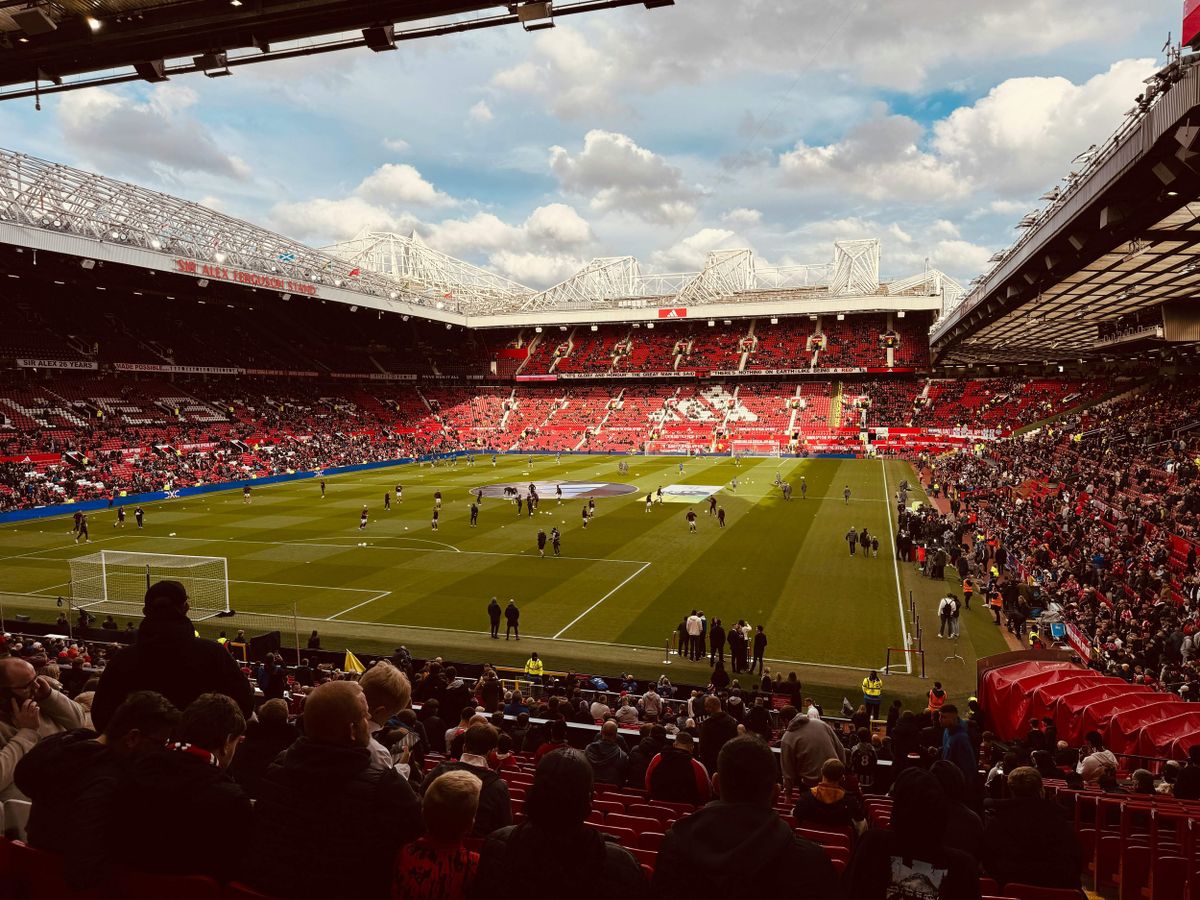
Manchester United - Old Trafford
- Club: Manchester United
- Location: Stretford, Greater Manchester
- Capacity: 74,197 (other sources list 75,454)
- Year Opened: 1910
- History and Key Facts: Affectionately known as "The Theatre of Dreams," Old Trafford has been Manchester United's home since February 19, 1910. The original stadium, with an approximate capacity of 80,000, was designed by Archibald Leitch. The ground was heavily damaged by bombing during World War II and was rebuilt, reopening in 1949. A series of expansions, particularly following the Taylor Report, have increased the stadium’s capacity to its current figure, making it the largest club football stadium in the UK.
Newcastle United - St James' Park
- Club: Newcastle United
- Location: Newcastle upon Tyne
- Capacity: 52,258
- Year Opened: 1892 (football played on site since 1880)
- History and Key Facts: St James' Park has been the home ground of Newcastle United since the club's formation in 1892, although the Newcastle Rangers played there from 1880. The stadium is renowned for its imposing presence in the city centre and its distinctive lop-sided appearance, a result of various expansions that have been constrained by surrounding streets and buildings, particularly Leazes Terrace. The desire for expansion has caused conflict with local residents and the council. With a capacity exceeding 52,000, it is one of the largest football venues in England.
Nottingham Forest - City Ground
- Club: Nottingham Forest
- Location: West Bridgford, Nottinghamshire
- Capacity: 30,404
- Year Opened: 1898
- History and Key Facts: Nottingham Forest moved to the City Ground on September 3, 1898. The ground was named in celebration of Nottingham's newly awarded city status that year. Situated on the banks of the River Trent, the City Ground hosted matches during the 1996 UEFA European Championships, for which its iconic “Trent End” stand was rebuilt. A fire in the Main Stand in 1968 during a match against Leeds United caused significant damage to the stadium, although thankfully, no injuries to the 31,126 crowd. A record attendance was achieved in 49,946 against Manchester United in 1967.
Sunderland - Stadium of Light
- Club: Sunderland
- Location: Monkwearmouth, Sunderland
- Capacity: 48,707
- Year Opened: 1997
- History and Key Facts: Sunderland moved to the Stadium of Light in 1997, leaving their historic Roker Park ground. The stadium's name was inspired by the region's coal mining heritage, with a Davy lamp statue prominently displayed outside. Built on the site of the former Monkwearmouth Colliery, it originally held 42,000 spectators and was expanded in 2000 to its current capacity of nearly 49,000. This makes it one of the largest grounds in England. The design allows for potential future expansion up to 64,000.
Tottenham Hotspur - Tottenham Hotspur Stadium
- Club: Tottenham Hotspur
- Location: Tottenham, London
- Capacity: 62,850
- Year Opened: 2019
- History and Key Facts: The Tottenham Hotspur Stadium was built on the site of the club's former home, White Hart Lane, and officially opened on April 3, 2019. Designed by Populous, this state-of-the-art venue is one of the most modern in Europe, with a retractable pitch system that allows it to host both football and NFL games. The South Stand is a notable feature. It is England's second-largest single-tiered end, with 17,500 seats that are designed to generate a formidable atmosphere. The entire project cost was estimated at £1 billion.
West Ham United - London Stadium
- Club: West Ham United
- Location: Stratford, London
- Capacity: 62,500 (regulated capacity for football - seated capacity is 68,013)
- Year Opened: 2012 (West Ham moved in 2016)
- History and Key Facts: The London Stadium was originally constructed as the centrepiece for the 2012 Summer Olympics and Paralympics, hosting the athletics events and opening/closing ceremonies. West Ham United became anchor tenants in 2016, relocating from their historic Boleyn Ground (Upton Park). The stadium underwent significant renovation between 2013 and 2016 to convert it for football use, including a new roof and retractable seating. It is a multi-purpose venue, also hosting athletics, concerts and other events.
Wolverhampton Wanderers - Molineux Stadium
- Club: Wolverhampton Wanderers
- Location: Wolverhampton, West Midlands
- Capacity: 31,750
- Year Opened: 1889
- History and Key Facts: Molineux Stadium has been the home of the Wolverhampton Wanderers since 1889. It holds the distinction of the first stadium built specifically for use by a Football League club. It was also pioneering in its early adoption of floodlights, hosting some of the earliest European Cup matches in the 1950s. The ground has undergone several redevelopments, particularly in the 1990s, to become the modern all-seater stadium that it is today.
The Premier League showcases a fascinating blend of historic grounds and brand-new arenas. This duality is a direct reflection of English top-flight football's heady mixture of traditional heritage and modern commercial power.
Clubs with long, continuous histories at the pinnacle of the game, such as Liverpool (Anfield, opened 1884 for Everton, Liverpool FC from 1892) and Manchester United (Old Trafford, opened 1910), play in stadiums that are themselves global icons, albeit heavily modernised to meet contemporary standards.
Simultaneously, clubs that have risen to prominence more recently, or those seeking a decisive competitive and commercial edge, have often opted for entirely new, state-of-the-art facilities, like Arsenal's Emirates Stadium (2006) and Tottenham Hotspur Stadium (2019). This financial capacity allows for both the sensitive preservation and cutting-edge modernisation of historic venues, as well as the ambitious construction of new ones.
Stadium capacity in the Premier League often serves as a clear statement of a club's stature and ambition. The largest capacities are generally found at clubs with sustained historical success and extensive global fanbases, such as Manchester United's Old Trafford (approx. 74,000-75,000) and Liverpool's recently expanded Anfield (over 61,000).
The development of new large stadiums, like the Tottenham Hotspur Stadium (62,850) and Manchester City's Etihad Stadium (approx. 53,000-55,000) also reflects ambitious ownership and the impact of recent on-field success.
This correlation is logical: larger fanbases and higher revenue potential both drive the need for, and provide the means to, build or expand. Consequently, stadium size in the Premier League is frequently a direct indicator of a club's commercial strength, global reach and its standing within the elite of world football.
III. EFL Championship Stadiums: The Pursuit of Glory
The EFL Championship stands as one of the most fiercely competitive second-tier leagues globally, often populated by clubs with rich histories, including former Premier League participants and winners of major domestic and European trophies.
Its stadiums are a diverse collection, ranging from large, historic grounds that have previously graced the top flight to more modest, yet passionately supported, venues. Let’s take a closer look.
Blackburn Rovers - Ewood Park
- Club: Blackburn Rovers
- Location: Blackburn, Lancashire
- Capacity: 31,367
- Year Opened: 1882 (Rovers regularly from 1890)
- History and Key Facts: Ewood Park first opened in April 1882 as a multi-sports ground, with the Blackburn Rovers making it their permanent home in 1890. Early 20th-century developments included stands designed by Archibald Leitch, such as the Nuttall Street Stand (1904). The stadium recorded its highest attendance of 62,522 in 1929 for an FA Cup match against the Bolton Wanderers. A major redevelopment in the 1990s, funded by benefactor Jack Walker, saw the construction of the impressive Jack Walker Stand (11,000 seats) and transformed Ewood Park into a modern all-seater venue, coinciding with the club's Premier League triumph in 1995.
Bristol City - Ashton Gate
- Club: Bristol City
- Location: Bristol
- Capacity: 27,000
- Year Opened: 1887
- History and Key Facts: Ashton Gate has served Bristol City and, for many years, Bristol Rugby Club (until 2014). The stadium first opened its doors in 1887. While it once held around 40,000 with terracing, it became all-seater following the Taylor Report, with a capacity of 21,000. Significant redevelopment work started in 2014, which included the rebuilding of the Williams and Wedlock stands and expansion of the Dolman Stand, increasing the capacity to its current 27,000.
Cardiff City - Cardiff City Stadium
- Club: Cardiff City
- Location: Cardiff, Wales
- Capacity: 33,280
- Year Opened: 2009
- History and Key Facts: Cardiff City Stadium was opened on July 22, 2009, with a friendly against Celtic, replacing the club's historic Ninian Park ground. The stadium is part of the larger Leckwith development, which also includes the Cardiff International Sports Stadium. Initial plans considered a 30,000 capacity, which was later adjusted, but an expansion of the Ninian Stand in July 2014 increased the official capacity to 33,280. It also serves as a primary venue for the Wales national football team.
Coventry City - Coventry Building Society Arena
- Club: Coventry City
- Location: Foleshill, Coventry, West Midlands
- Capacity: 32,609
- Year Opened: 2005
- History and Key Facts: The Coventry Building Society Arena, formerly known as the Ricoh Arena, opened in August 2005 to replace Coventry City's historic Highfield Road, which had been their home for 106 years (1899-2005). The modern arena is a multi-purpose venue, also hosting concerts and other sporting events. The club has faced challenges with the stadium lease since moving in.
Derby County - Pride Park Stadium
- Club: Derby County
- Location: Pride Park, Derby
- Capacity: 33,597
- Year Opened: 1997
- History and Key Facts: Derby County moved to Pride Park Stadium in 1997, leaving their long-standing home, The Baseball Ground. The stadium was built as part of a commercial redevelopment of the Pride Park business area on the outskirts of Derby city centre. It is the 16th-largest football ground in England and has hosted two full international matches (England vs. Mexico in 2001 and Brazil vs. Ukraine in 2010) as well as several England U21 games and the 2009 FA Women's Cup Final.
Hull City - MKM Stadium
- Club: Hull City
- Location: Kingston upon Hull
- Capacity: 25,586
- Year Opened: 2002
- History and Key Facts: The MKM Stadium, previously known as the KC Stadium (2002–2016) and KCOM Stadium (2016–2021), opened on December 18, 2002, with Hull City defeating Sunderland 1-0. Designed by Miller Partnership and Arup Sport, the stadium features a single-tiered bowl with a second tier on the west (main) stand. It was built with the possibility of future expansion over the east stand. It is also home to Hull F.C. rugby league club.
Ipswich Town - Portman Road
- Club: Ipswich Town
- Location: Ipswich, Suffolk
- Capacity: 30,056
- Year Opened: 1884
- History and Key Facts: Portman Road has been the home of Ipswich Town since the club's early days in 1884. The stadium underwent significant redevelopment in the early 2000s, which saw its capacity increase from 22,600 to its current figure of over 30,000. This makes it the largest football ground in East Anglia. The North Stand was completely rebuilt in 2001, adding around 7,500 seats. It is now named the Sir Bobby Robson Stand. Portman Road has also hosted international football, including a senior England friendly match against Croatia in 2003.
Leicester City - King Power Stadium
- Club: Leicester City
- Location: Leicester
- Capacity: 32,259
- Year Opened: 2002
- History and Key Facts: Leicester City moved to the King Power Stadium in 2002, following the closure of their historic Filbert Street ground. Upon opening, the new venue was known as the Walkers Stadium due to a sponsorship deal with the local crisp manufacturer. The stadium, with a capacity of just over 32,000, provided the club with modern facilities and a significantly larger capacity than their previous home. It also witnessed Leicester City's remarkable Premier League title win in the 2015-16 season.
Luton Town - Kenilworth Road
- Club: Luton Town
- Location: Bury Park, Luton, Bedfordshire
- Capacity: 12,056
- Year Opened: 1905
- History and Key Facts: Luton Town moved to Kenilworth Road in 1905 after their previous ground at Dunstable Road was sold for housing. The first match was a 0-0 draw against Plymouth Argyle on September 4, 1905. The stadium is famed for its unique and traditional character, with the Oak Road End away entrance notably accessed through an alleyway between terraced houses. The ground underwent significant upgrades in 2023 to meet Premier League requirements following the club's promotion, including the construction of a new Bobbers Stand. Its record attendance is 30,069 for a 1959 FA Cup tie against Blackpool.
Middlesbrough - Riverside Stadium
- Club: Middlesbrough
- Location: Middlesbrough, Teesside
- Capacity: 33,746
- Year Opened: 1995
- History and Key Facts: Middlesbrough relocated to the newly built Riverside Stadium on August 26, 1995, after 92 years at their historic Ayresome Park ground. The Riverside was the first stadium designed and constructed to comply with the recommendations of the Taylor Report. Built in an impressive 32 weeks, its initial capacity was later amended, reaching its current figure of over 34,000.
Millwall - The Den
- Club: Millwall
- Location: Bermondsey, London
- Capacity: 20,146
- Year Opened: 1993 (Transfermarkt states 1992)
- History and Key Facts: Millwall moved to The Den in August 1993, with a friendly against Sporting Lisbon marking its inauguration. At first, the ground was called The New Den to distinguish it from the team’s previous ground, also named The Den. It was the first new all-seater stadium to be completed in London after the Taylor Report. The original plan was for a larger stadium (up to 30,000), but funding constraints led to the current design.
Norwich City - Carrow Road
- Club: Norwich City
- Location: Norwich, Norfolk
- Capacity: 27,150
- Year Opened: 1935
- History and Key Facts: Carrow Road became Norwich City's home in 1935, constructed in a remarkable 82 days after the club had to leave their previous ground, "The Nest," due to safety concerns. The site was formerly the Boulton Paul Sports Ground. The stadium has undergone numerous alterations, most notably after a fire destroyed the old City Stand in 1984. It became all-seater in 1992. Its record all-seater attendance was 27,137, but its overall record with terracing was 43,984 in 1963.
Oxford United - Kassam Stadium
- Club: Oxford United
- Location: Littlemore, Oxford
- Capacity: 12,500
- Year Opened: 2001
- History and Key Facts: The Kassam Stadium opened in 2001, providing Oxford United with a new home after leaving the historic Manor Ground. Plans for a new stadium were announced in 1995. For many years, the stadium was distinctive as a three-sided ground, with the west end undeveloped. It has hosted rugby union matches, with London Welsh using it as their home ground for a period. The record attendance is 12,243 for a match against Leyton Orient in 2006.
Plymouth Argyle - Home Park
- Club: Plymouth Argyle
- Location: Milehouse, Plymouth, Devon
- Capacity: 17,900
- Year Built: 1892 (Argyle FC from 1900, Plymouth Argyle FC from 1903)
- History and Key Facts: Home Park, affectionately known as "The Theatre of Greens," has been the home of Plymouth Argyle since 1903, although the amateur Argyle F.C. used it from 1900. The ground itself was built in 1892. It underwent significant transformations in 2001, when three sides were completely rebuilt. Further redevelopment of the Mayflower Grandstand occurred in 2019. The record attendance is 43,596, set in 1936 against Aston Villa.
Portsmouth - Fratton Park
- Club: Portsmouth
- Location: Portsmouth, Hampshire
- Capacity: 20,899
- Year Opened: 1899
- History and Key Facts: Fratton Park, nicknamed "The Old Girl" or "Fortress Fratton," has been Portsmouth's home since its opening on August 15, 1899 (first match September 6, 1899). One of its most distinctive features is the South Stand, designed by Archibald Leitch in 1925, which has a mock-Tudor facade on Frogmore Road. The ground's record attendance is 51,385, achieved in 1949 for an FA Cup tie against Derby County. It became all-seater in 1996, and the club is currently undergoing phased redevelopment work.
Preston North End - Deepdale
- Club: Preston North End
- Location: Deepdale, Preston, Lancashire
- Capacity: 23,404
- Year Built: 1875 (PNE home since 1878)
- History and Key Facts: Deepdale holds a significant place in football history as one of the oldest continuously used football stadiums in the world. The land was leased in 1875, and Preston North End began playing there in 1878. The stadium underwent a major renovation program starting in 1995, inspired by the design of Genoa's Stadio Luigi Ferraris. This resulted in four distinct, modern stands named after club legends like Sir Tom Finney and Bill Shankly. The National Football Museum was in Deepdale for a period.
Queens Park Rangers - Loftus Road
- Club: Queens Park Rangers
- Location: Shepherd's Bush, London
- Capacity: 18,439
- Year Opened: 1904 (QPR moved there in 1917)
- History and Key Facts: Loftus Road was first used in 1904 by Shepherd's Bush FC, with the Queens Park Rangers making it their home in 1917 after their Park Royal ground was commandeered. Known for its tight, compact and atmospheric nature, the stadium has seen several redevelopments, including the construction of new stands at the School End (1980) and Loftus Road end (1981). It has also temporarily hosted Fulham FC and the London Wasps rugby union team. Its record attendance is 35,353 against Leeds United in 1974. The stadium is currently known as the MATRADE Loftus Road Stadium for sponsorship reasons.
Sheffield United - Bramall Lane
- Club: Sheffield United
- Location: Highfield, Sheffield
- Capacity: 32,702
- Year Opened: 1855 (Sheffield United's home since 1889)
- History and Key Facts: Bramall Lane is the oldest major stadium in the world still hosting professional association football matches. It opened as a cricket ground on April 30, 1855, and Sheffield United FC have played there since their establishment in 1889. It is one of only two grounds (the other being The Oval) to have hosted England football internationals, an England Test cricket match (vs. Australia in 1902) and an FA Cup Final (1912 replay). Record attendance is 68,287 for a 1936 FA Cup tie against Leeds United.
Sheffield Wednesday - Hillsborough
- Club: Sheffield Wednesday
- Location: Owlerton, Sheffield
- Capacity: 39,732 (temporarily reduced to 34,835 on safety grounds)
- Year Opened: 1899
- History and Key Facts: Hillsborough Stadium, known as Owlerton Stadium until 1914, has been the home of Sheffield Wednesday since its opening on September 2, 1899. The ground has hosted World Cup matches (1966) and European Championship games (1996). Its highest ever attendance was 72,841 for an FA Cup tie against Manchester City in 1934. The stadium is known as the site of the 1989 Hillsborough disaster, where 97 Liverpool fans lost their lives. This tragedy led to the comprehensive Taylor Report and subsequent safety improvements in English football grounds.
Southampton - St Mary's Stadium
- Club: Southampton
- Location: Southampton
- Capacity: 32,384
- Year Opened: 2001
- History and Key Facts: Southampton relocated to St Mary's Stadium in 2001, after 103 years at their much-loved but outdated former home, The Dell. The name "St Mary's" is a tribute to the club's origins, having been founded by members of the St Mary's Church Young Men's Association. The modern, all-seater stadium is located close to the city's well-known seaport. The construction cost was approximately £32 million.
Stoke City - bet365 Stadium
- Club: Stoke City
- Location: Stoke-on-Trent, Staffordshire
- Capacity: 30,089
- Year Opened: 1997
- History and Key Facts: Stoke City moved to the bet365 Stadium, formerly known as the Britannia Stadium (1997-2016), on August 30, 1997, ending 115 years at the Victoria Ground. The all-seater stadium was built on the former site of the Stafford No. 2 Colliery at a cost of nearly £15 million. Expansion works in 2017 increased the capacity to its current figure by filling in one of the corners.
Swansea City - Swansea.com Stadium
- Club: Swansea City
- Location: Swansea, Wales
- Capacity: 21,088
- Year Opened: 2005
- History and Key Facts: The Swansea.com Stadium, formerly known as the Liberty Stadium (2005-2021) and White Rock Stadium during planning, opened on July 10, 2005. It replaced Swansea City's long-time home, Vetch Field, and is also home to the Ospreys rugby union team. The stadium was a public-private partnership, with construction costing around £27 million. There have been discussions about expanding the stadium, particularly during Swansea's Premier League tenure.
Watford - Vicarage Road
- Club: Watford
- Location: Watford, Hertfordshire
- Capacity: 21,000 (Transfermarkt lists 21,577)
- Year Opened: 1922
- History and Key Facts: Watford moved to Vicarage Road, affectionately known as "The Vic," in 1922 from their previous ground at Cassio Road. The stadium has seen significant redevelopment over the years, with two of its main stands named after club legends: Sir Elton John (honorary Life President and former chairman) and Graham Taylor (their most successful manager). In December 2016, the stadium opened a Sensory Room for supporters with autism, a pioneering initiative in English football.
West Bromwich Albion - The Hawthorns
- Club: West Bromwich Albion
- Location: West Bromwich, West Midlands
- Capacity: 26,688
- Year Opened: 1900
- History and Key Facts: The Hawthorns has been the home of West Bromwich Albion since September 3, 1900. It is the club’s sixth ground. It holds the distinction of being the first Football League ground to be built in the 20th century, with construction taking only four months. The official record attendance is 64,815, set in an FA Cup match against Arsenal in 1937. The ground became all-seated following the Taylor Report, with major terrace demolitions and stand replacements in the 1990s. It is also noted for being the highest professional football ground in England above sea level
The EFL Championship is characterised by clubs with significant top-flight pedigree and those with aspirations of reaching such heights. We can see this in their home grounds. Many stadiums in this division, such as Leeds United's Elland Road (capacity ~37,000), Sunderland's Stadium of Light (capacity ~49,000) and Sheffield Wednesday's Hillsborough (capacity ~39,000), possess capacities well above the average for typical second-tier European leagues.
This is a direct consequence of these clubs spending considerable periods in the Premier League or the old First Division, during which their stadiums were developed to accommodate larger crowds. Their presence in the Championship underscores the intense level of competition and the widespread ambition to return to or achieve Premier League status, making the league one of the wealthiest and most-watched second-tier competitions globally.
Similar to the Premier League, the Championship stadium landscape displays a dichotomy between new builds and historic venues, although new constructions are often on a more modest scale. Several clubs moved to new grounds around the turn of the millennium, a period that coincided with either on-pitch success or the pressing need to meet modern stadium standards.
Examples include Stoke City's bet365 Stadium (1997), Hull City's MKM Stadium (2002), Cardiff City Stadium (2009), Coventry Building Society Arena (2005) and Swansea.com Stadium (2005). These stadiums contrast with clubs like Preston North End, who play at Deepdale, a ground in use since 1878, or Sheffield United at Bramall Lane (1855, club from 1889).
Unlike some of the vast new arenas in the Premier League, new builds in the Championship typically range from 20,000 to 35,000 in capacity. This reflects a different financial landscape, but still represents a significant upgrade from older, smaller grounds. Stadium development in the Championship is frequently a strategic manoeuvre aimed at becoming "Premier League ready" or consolidating a club's position after a period of advancement.
IV. EFL League One Stadiums: Tradition and Ambition
EFL League One serves as a crucial tier in the English football pyramid. The league has a vibrant mix of clubs, including those who have spent spells in the higher divisions, as well as ambitious teams striving for upward mobility.
The stadiums in this league reflect this diversity, ranging from grounds that have hosted top-flight football to more compact venues rooted in their local communities. Let’s take a look.
Barnsley - Oakwell
- Club: Barnsley
- Location: Barnsley, South Yorkshire
- Capacity: 23,287
- Year Built: 1887 (club moved there in 1888)
- History and Key Facts: Oakwell has been Barnsley's home since 1888, a year after the club's formation as Barnsley St Peter's. The ground holds the distinction of being the first in English football to feature a designated stand for disabled supporters. Its record attendance was 40,255 for a 1936 FA Cup tie against Stoke City.
Birmingham City - St. Andrew's @ Knighthead Park
- Club: Birmingham City
- Location: Bordesley, Birmingham
- Capacity: 29,409
- Year Opened: 1906
- History and Key Facts: St. Andrew's was constructed and opened on December 26, 1906, to replace the club's previous Muntz Street ground, which had become too small. The original St. Andrew's was estimated to hold 75,000 spectators, with one grandstand and extensive terracing, and the official capacity was set at 68,000 in 1938. The record attendance is recorded as either 66,844 or 67,341 for a 1939 FA Cup tie against Everton. The stadium underwent significant redevelopment between 1993-1999 to become the modern venue it is today.
Blackpool - Bloomfield Road
- Club: Blackpool
- Location: Blackpool, Lancashire
- Capacity: Approx. 16,500
- Year Opened: 1899
- History and Key Facts: Bloomfield Road became Blackpool's permanent home in the 1901-02 season, although the ground itself opened in 1899, initially named Gamble's Field. Early developments included a small wooden grandstand and the Spion Kop terrace. The record attendance is 38,098, set in 1955 against Wolverhampton Wanderers. The stadium underwent substantial redevelopment between 2002 and 2010, transforming it with new stands to meet modern requirements.
Bolton Wanderers - Toughsheet Community Stadium
- Club: Bolton Wanderers
- Location: Horwich, Greater Manchester
- Capacity: 28,723
- Year Opened: 1997
- History and Key Facts: The Bolton Wanderers moved to this modern stadium in 1997, leaving their historic Burnden Park ground. Commissioned in 1995 and designed by Populous (then HOK Sport), the stadium was built to reflect the club's ambitions and provide regional sports and leisure facilities. It was formerly known as the Reebok Stadium (1997-2014), Macron Stadium (2014-2018) and University of Bolton Stadium (2018-2023).
Bristol Rovers - Memorial Stadium
- Club: Bristol Rovers
- Location: Horfield, Bristol
- Capacity: 9,832
- Year Opened: 1921 (Bristol Rovers moved in 1996)
- History and Key Facts: The Memorial Ground opened in 1921, dedicated to the memory of local rugby union players killed in World War I. It was the home of Bristol Rugby Club until 2014. Bristol Rovers FC became tenants in 1996. The stadium is undergoing phased redevelopment, with a new South Stand constructed in 2023 to increase capacity. There are further plans to develop the East and North stands to potentially reach a 16,000-17,000 capacity.
Burton Albion - Pirelli Stadium
- Club: Burton Albion
- Location: Burton upon Trent, Staffordshire
- Capacity: 6,912 (2,034 seated)
- Year Opened: 2005
- History and Key Facts: The Pirelli Stadium was built in 2005, replacing Burton Albion's old Eton Park home. Plans for the new ground emerged in 2003 as the club's ambitions outgrew Eton Park. Construction began in December 2003, with the stadium designed to meet English Football League standards. The £7.2 million facility was officially opened on July 16, 2005. Its record attendance is 6,746 against Derby County.
Cambridge United - Cledara Abbey Stadium (Abbey Stadium)
- Club: Cambridge United
- Location: Cambridge
- Capacity: 8,127
- Year Built: 1923 (club home since 1932)
- History and Key Facts: Cambridge United have played at the Abbey Stadium since 1932. The first match was a friendly against Cambridge University Press on August 31, 1932. The ground itself was built in 1923. Its record attendance of 14,000 was for a friendly against Chelsea in 1970, marking the first use of new floodlights. The stadium is currently known as the Cledara Abbey Stadium for sponsorship reasons.
Charlton Athletic - The Valley
- Club: Charlton Athletic
- Location: Charlton, London
- Capacity: 27,111
- Year Opened: 1919
- History and Key Facts: The Valley has been Charlton Athletic's home since 1919, although the club endured a period of exile between 1985 and 1992 due to safety concerns and financial issues with the ground. For many years, it was one of the largest Football League grounds, with a maximum capacity of around 75,000. Since the club's return in 1992, three of the four stands have been rebuilt (between 1994 and 2001). A safe standing area is set to be installed in the North Stand (Covered End) for the 2024-25 season.
Crawley Town - Broadfield Stadium
- Club: Crawley Town
- Location: Crawley, West Sussex
- Capacity: 5,996
- Year Opened: 1997
- History and Key Facts: Broadfield Stadium opened in 1997, providing Crawley Town with a purpose-built home. It has been known by several sponsored names, including the Checkatrade.com Stadium (from 2013) and The People’s Pension Stadium (2018-2022). The stadium has a mix of seated and terraced areas.
Exeter City - St. James Park
- Club: Exeter City
- Location: Exeter, Devon
- Capacity: 8,720
- Year Built: 1904
- History and Key Facts: St. James Park has been Exeter City's home since the club's formation in 1904, with the first match played on September 10, 1904. Its record attendance is 20,984 for an FA Cup Sixth Round Replay against Sunderland in 1931. A recent £3.4 million redevelopment project included the demolition of the 90-year-old Old Grandstand and its replacement with a new 1,600-seat stand, financed by an adjacent student accommodation development.
Huddersfield Town - Kirklees Stadium (John Smith's Stadium)
- Club: Huddersfield Town
- Location: Huddersfield, West Yorkshire
- Capacity: 24,121
- Year Opened: 1994
- History and Key Facts: The Kirklees Stadium, currently known as the John Smith's Stadium, opened in August 1994, replacing Huddersfield Town's historic Leeds Road ground. It was initially called the Alfred McAlpine Stadium (1994–2004) and later the Galpharm Stadium (2004–2012). Designed by Populous, it opened with just two side stands completed, with the South Stand added in December 1994 and the North Stand in 1998 to reach its current capacity of approximately 24,500. The stadium is also home to the Huddersfield Giants rugby league team.
Leyton Orient - Brisbane Road (Matchroom Stadium)
- Club: Leyton Orient
- Location: Leyton, London
- Capacity: 9,271
- Year Club Occupancy Began: 1937
- History and Key Facts: Leyton Orient have played at Brisbane Road since 1937; prior to this, it was the home of amateur side Leyton F.C.. The ground has undergone significant redevelopment in recent years, with the construction of three new stands. It’s now an all-seater and it has hosted several Tottenham Hotspur Reserves matches.
Lincoln City - Sincil Bank (LNER Stadium)
- Club: Lincoln City
- Location: Lincoln
- Capacity: 10,669
- Year Built: 1894 (club home since 1895)
- History and Key Facts: Sincil Bank has been Lincoln City's home since 1895, after the club moved from the nearby John O'Gaunts ground. The largest stand, the GBM Stand (formerly Co-op Stand), holds approximately 5,700 spectators and was redeveloped in 1995. The St Andrews Stand was rebuilt in 1987. The stadium became all-seater in May 1999 after the Stacey-West Stand terracing was replaced with seats.
Mansfield Town - Field Mill (One Call Stadium)
- Club: Mansfield Town
- Location: Mansfield, Nottinghamshire
- Capacity: 9,186
- Year Built: 1861 (football played since at least the 1950s, ground itself is older)
- History and Key Facts: Field Mill, currently known as the One Call Stadium, is the oldest ground in the English Football League. It has hosted football since before 1861, although Mansfield Town's continuous use of the venue is more recent. The ground was located opposite a large water-powered textile mill, which was demolished in 1925. The name changed to One Call Stadium in April 2012 due to a sponsorship deal. Record attendance was 24,467 versus Nottingham Forest in 1953.
Northampton Town - Sixfields Stadium
- Club: Northampton Town
- Location: Sixfields, Northampton
- Capacity: 8,203 (upon completion of East Stand in 2025)
- Year Opened: 1994
- History and Key Facts: Northampton Town moved to Sixfields Stadium in October 1994, leaving their historic County Ground. The first game was against Barnet on October 15, 1994. The stadium also temporarily hosted Coventry City from July 2013 to August 2014. Redevelopment of the East Stand, which began in 2014, is set to be completed by early 2025. This will increase the stadium capacity to 8,203 and will add executive boxes for the first time in the club's history.
Peterborough United - London Road Stadium (Weston Homes Stadium)
- Club: Peterborough United
- Location: Peterborough, Cambridgeshire
- Capacity: 13,511
- Year Built: 1913 (club home since 1934)
- History and Key Facts: London Road was first built in 1913. In 1934, Peterborough United started using the ground. The original ground had a single wooden stand for 250, replaced in 1923. Major developments began in the 1950s, adding new terracing and a new Main (North) Stand in 1957. The two-tiered South Stand (now Meerkat Family Stand) opened in 1996. It had a new capacity of 5,000. The stadium’s record attendance is 30,096 for a 1965 FA Cup tie against Swansea Town, when much of the ground was terracing. The GH Display Stand (East) was completed in 2014, replacing Moy's End Terrace.
Reading - Select Car Leasing Stadium (Madejski Stadium)
- Club: Reading
- Location: Reading, Berkshire
- Capacity: 24,161
- Year Opened: 1998
- History and Key Facts: Reading moved to the stadium in August 1998, replacing their historic Elm Park ground. At the time, the venue was called the Madejski Stadium, after former chairman Sir John Madejski. The construction cost over £50 million. Plans to increase capacity to 36,900 received planning permission during Reading's Premier League tenure, but they were put on hold after relegation. The stadium was renamed the Select Car Leasing Stadium in 2021 for sponsorship reasons.
Rotherham United - New York Stadium (AESSEAL New York Stadium)
- Club: Rotherham United
- Location: Rotherham, South Yorkshire
- Capacity: 12,021
- Year Opened: 2012
- History and Key Facts: The New York Stadium opened in July 2012, providing Rotherham United with a modern home after a period playing at the Don Valley Stadium in Sheffield. Before that, the club played at Millmoor. The stadium, which cost approximately £20 million to construct, has an all-seated capacity of just over 12,000, with the potential for future expansion. It hosted matches during the UEFA Women's Euro 2022 tournament.
Shrewsbury Town - New Meadow (Croud Meadow)
- Club: Shrewsbury Town
- Location: Shrewsbury, Shropshire
- Capacity: 9,875 (includes 555 safe standing)
- Year Opened: 2007
- History and Key Facts: Shrewsbury Town moved to New Meadow in the Summer of 2007, replacing their historic Gay Meadow ground, which had been their home since 1910. The £11.2 million project resulted in a 10,000 capacity all-seater stadium with four distinct stands and improved facilities. Its record attendance is 10,210 for a League Cup match against Chelsea in 2014. The stadium has had various sponsored names, including Montgomery Waters Meadow and, currently, Croud Meadow.
Stevenage - Broadhall Way (Lamex Stadium)
- Club: Stevenage
- Location: Stevenage, Hertfordshire
- Capacity: 7,800
- Year Built: 1961
- History and Key Facts: Broadhall Way has been the home of Stevenage (and its predecessor clubs Stevenage Town and Stevenage Athletic) since the early 1960s. The ground was significantly upgraded in the early 2000s, including a new £600,000 South Stand (away end) in 2001. The North Terrace was replaced by a new 1,428 all-seater stand, which officially opened in December 2019. The stadium has been known as the Lamex Stadium since 2009 due to a sponsorship deal. Its record attendance is 8,040 against Newcastle United in a 1998 FA Cup tie, when a temporary stand was used.
Stockport County - Edgeley Park
- Club: Stockport County
- Location: Edgeley, Stockport
- Capacity: 10,852
- Year Built: 1891 (club home since 1902)
- History and Key Facts: Edgeley Park has been Stockport County's home ground since 1902, although the site was first used for rugby in 1891. The original timber Main Stand was destroyed in a fire in 1935. The Cheadle End, the largest stand (capacity 5,044), was rebuilt in 1995. The Railway End, the away section, was converted to seating in 2001, making the ground an all-seater. The club has plans for phased redevelopment to increase capacity to around 18,000-20,000, starting with the East Stand.
Wigan Athletic - Brick Community Stadium
- Club: Wigan Athletic
- Location: Wigan, Greater Manchester
- Capacity: 25,138
- Year Opened: 1999
- History and Key Facts: Wigan Athletic moved to the Brick Community Stadium in August 1999, leaving their historic Springfield Park ground. Built by Alfred McAlpine, it cost £30 million. The stadium was inaugurated with a friendly against Manchester United. It was formerly known as the JJB Stadium (1999–2009) and the DW Stadium (2009-2024) before becoming The Brick Community Stadium in May 2024 in partnership with a local charity. The stadium is also home to the Wigan Warriors rugby league team, who also own it, leasing the ground to Wigan Athletic.
Wrexham - STōK Cae Ras (Racecourse Ground)
- Club: Wrexham AFC
- Location: Wrexham, Wales
- Capacity: 13,341 (set to increase to ~16,000 with new Kop stand)
- Year Opened: 1807 (football played since 1872)
- History and Key Facts: The Racecourse Ground is recognised by the Guinness Book of World Records as the world's oldest international football stadium, having hosted its first international match in 1877 (although football was first played there in 1872). The ground itself opened in 1807 for horse racing and cricket. The old Kop stand, built in 1952, was demolished in late 2022/early 2023. A new 5,500-capacity Kop stand, designed by Populous, should begin construction in Summer 2025, with completion by Summer 2026. This will increase the stadium's total capacity to around 16,000 and ensure it meets UEFA Category 4 requirements. The stadium was renamed STōK Cae Ras in 2023 for sponsorship reasons.
Wycombe Wanderers - Adams Park
- Club: Wycombe Wanderers
- Location: High Wycombe, Buckinghamshire
- Capacity: 10,137
- Year Opened: 1990
- History and Key Facts: The Wycombe Wanderers moved to Adams Park in 1990, leaving Loakes Park. The stadium was built at a cost of £3.5 million. The initial capacity was 6,000, which increased during improvements after the club entered the Football League in 1993. The Woodlands Stand (4,990 seats) was built in 1996. The Hillbottom Road End (away fans) was extended in 2001, increasing its capacity to 2,026 seats. For a period (2002-2014), Adams Park was also home to the Wasps rugby union team.
The stadium landscape in EFL League One is a testament to the fluid nature of the English football pyramid. It's a division where clubs with diverse histories and trajectories converge.
This is evident in their home grounds, which range from venues built in the late 19th or early 20th century – such as Barnsley's Oakwell (1887/1888), Birmingham City's St. Andrew's (1906), Blackpool's Bloomfield Road (1899), Lincoln City's Sincil Bank (1894/1895) and Wrexham's historic Racecourse Ground (football from 1872) – to more contemporary constructions from the 1990s onwards.
Examples of these more modern facilities include the Bolton Wanderers' Toughsheet Community Stadium (1997), Huddersfield Town's Kirklees Stadium (1994), Reading's Select Car Leasing Stadium (1998) and Wigan Athletic's Brick Community Stadium (1999).
Some of the league’s clubs are former top-tier sides, and their larger, often older, grounds bear witness to past glories and larger fan bases accustomed to higher levels of football.
Others have steadily climbed the leagues, investing in newer, sometimes more modest facilities that match their current status and ambitions. The recent high-profile takeover and subsequent promotions of Wrexham AFC offer a compelling example of how external factors can rapidly influence stadium development.
The significant investment in the club has led to ambitious plans for the Racecourse Ground, most notably the construction of a new 5,500-capacity Kop stand. This project aims to increase capacity to around 16,000 and upgrade the historic venue to meet UEFA Category 4 standards, reflecting the club's renewed ambition on and off the pitch.
Stadium development is not solely a product of long-term organic growth, but it can be significantly accelerated by new ownership, investment and a rapid change in a club's competitive trajectory.
V. EFL League Two Stadiums: The Heartbeat of Communities
EFL League Two, the fourth tier of professional English football, is a division where the connection between club and community is often at its most palpable. Its stadiums are typically more intimate than those in higher leagues, yet many possess long and storied histories, serving as enduring local landmarks. Let’s take a closer look.
Accrington Stanley - Crown Ground (Wham Stadium)
- Club: Accrington Stanley
- Location: Accrington, Lancashire
- Capacity: 5,450 (3,100 seated)
- Year Opened: 1968
- History and Key Facts: The Crown Ground, currently known as the Wham Stadium, opened in 1968 and has been Accrington Stanley's home ever since. It's a compact ground, with recent improvements including a new 1,100-seater Eric Whalley Stand, which replaced the Whinney Hill Terrace. Its record attendance is 5,397 for an FA Cup tie against Derby County in 2019.
AFC Wimbledon - Plough Lane (Cherry Red Records Stadium)
- Club: AFC Wimbledon
- Location: Wimbledon, London
- Capacity: 9,369
- Year Opened: 2020
- History and Key Facts: AFC Wimbledon moved into the new Plough Lane stadium on November 3, 2020, marking a historic return for football to the Plough Lane area, approximately 200 yards from the original Plough Lane stadium where Wimbledon F.C. played until 1991. Construction began in 2019, with an initial capacity of 9,300 and planning permission for future expansion to 20,000. The project was partly funded through crowdfunding and a bond issue.
Barrow - Holker Street (SO Legal Stadium)
- Club: Barrow AFC
- Location: Barrow-in-Furness, Cumbria
- Capacity: 6,500 (2,249 seated)
- Club Occupancy Began: 1909
- History and Key Facts: Barrow AFC moved to Holker Street in 1909, taking a lease on a site previously used as a rubbish tip by Furness Railway. The first wooden stand was built in 1912, and by 1921, the ground had covered terracing on three sides. The stadium’s record attendance is 16,874 for a 1954 FA Cup tie against Swansea Town. The ground retains a traditional feel, with three sides of terracing and one all-seater Main Stand.
Bradford City - Valley Parade (University of Bradford Stadium)
- Club: Bradford City
- Location: Bradford, West Yorkshire
- Capacity: 24,840
- Year Opened: 1886
- History and Key Facts: Valley Parade has been the home of Bradford City since the club's formation in 1903, although the ground itself opened in 1886 for Manningham Rugby Football Club. The stadium was the scene of a devastating fire on May 11, 1985, which claimed 56 lives. This tragedy led to significant changes in ground safety legislation. Valley Parade has since been completely rebuilt, with modern stands like the two-tiered Kop End. Its record attendance is 39,146 against Burnley in 1911.
Bromley - Hayes Lane
- Club: Bromley
- Location: Bromley, London
- Capacity: 5,300
- Club Occupancy Began: 1938
- History and Key Facts: Bromley FC has played at Hayes Lane since 1938. Recent developments include the installation of a 4G pitch and the opening of the new Glyn Beverly Stand (South Stand) in 2019, a multi-purpose building with 1,450 seats. The John Fiorini (Main) Stand opened in 1993.
Carlisle United - Brunton Park
- Club: Carlisle United
- Location: Carlisle, Cumbria
- Capacity: 17,949
- Year Opened: 1909
- History and Key Facts: Brunton Park has been Carlisle United's home since 1909. It is a relatively large ground for League Two, with a capacity close to 18,000. The Pioneer (East) Stand houses away fans, with an allocation of around 2,000. The stadium suffered flooding in 2005 and 2015, requiring significant restoration work.
Cheltenham Town - Whaddon Road (Completely-Suzuki Stadium)
- Club: Cheltenham Town
- Location: Cheltenham, Gloucestershire
- Capacity: 7,066
- Club Occupancy Began: 1932 (ground opened 1927)
- History and Key Facts: Cheltenham Town have played at Whaddon Road since 1932, although the ground, originally named Victory Sports Ground, opened in 1927. It has used various sponsored names, including Abbey Business Stadium and Jonny-Rocks Stadium, before becoming the Completely-Suzuki Stadium. The stadium’s record attendance is 8,326, set in 1956.
Chesterfield - SMH Group Stadium
- Club: Chesterfield FC
- Location: Whittington Moor, Chesterfield, Derbyshire
- Capacity: 10,504
- Year Opened: 2010
- History and Key Facts: Chesterfield moved to the SMH Group Stadium (formerly b2net Stadium, Proact Stadium and Technique Stadium) in 2010, replacing their historic Saltergate ground. The £13 million all-seater stadium was built on the site of the former Dema Glassworks. The official opening match was a friendly against Derby County in July 2010.
Colchester United - Colchester Community Stadium (JobServe Community Stadium)
- Club: Colchester United
- Location: Myland, Colchester, Essex
- Capacity: 10,105
- Year Opened: 2008
- History and Key Facts: Colchester United moved to the Colchester Community Stadium in August 2008, leaving their Layer Road ground. The stadium, which cost £14 million to build, has four stands and also hosts conferences and music events, with a concert capacity of 20,000. It has hosted several England youth international matches.
Crewe Alexandra - Gresty Road (Mornflake Stadium)
- Club: Crewe Alexandra
- Location: Crewe, Cheshire
- Capacity: 10,153
- Year Opened: 1906
- History and Key Facts: Gresty Road, officially Alexandra Stadium and currently the Mornflake Stadium, has been Crewe Alexandra's home since 1906. The stadium is notable for its disproportionately large Boughey Stand (formerly Railtrack Stand), which holds 6,809 spectators, more than half the ground's total capacity. Its other three stands are much smaller. The record attendance is 20,000 for a 1960 FA Cup tie against Tottenham Hotspur.
Doncaster Rovers - Eco-Power Stadium
- Club: Doncaster Rovers
- Location: Lakeside, Doncaster, South Yorkshire
- Capacity: 15,231
- Year Opened: 2007 (built 2006)
- History and Key Facts: The Doncaster Rovers moved to the Eco-Power Stadium (formerly Keepmoat Stadium) in 2007, after 84 years at Belle Vue. The £21 million stadium is part of the wider Lakeside Sports Complex and is also home to Doncaster Rugby League Club and Doncaster Rovers Belles Ladies FC. The venue’s record attendance is 15,001 against Leeds United in 2008.
Fleetwood Town - Highbury Stadium
- Club: Fleetwood Town
- Location: Fleetwood, Lancashire
- Capacity: 5,327 (2,701 seated)
- Year Opened: 1939
- History and Key Facts: Highbury Stadium has been Fleetwood Town's home since its opening in 1939. It is one of the smallest grounds in the EFL, with terracing making up a large portion of its capacity. The ground has undergone substantial redevelopment in recent years to match the club's rise through the leagues, including the modern Parkside Stand.
Gillingham - Priestfield Stadium (MEMS Priestfield Stadium)
- Club: Gillingham FC
- Location: Gillingham, Kent
- Capacity: 11,582
- Year Built: 1893
- History and Key Facts: Priestfield Stadium has been Gillingham's home since the club's formation as New Brompton FC in 1893. The stadium underwent extensive redevelopment in the late 1990s, transforming it into an all-seater venue with four stands, although one is temporary. It also temporarily hosted Brighton & Hove Albion for two seasons in the 1990s.
Grimsby Town - Blundell Park
- Club: Grimsby Town
- Location: Cleethorpes, North East Lincolnshire
- Capacity: 9,052
- Year Built: 1899
- History and Key Facts: Grimsby Town moved to Blundell Park in 1899, their fourth ground. Only one of the original stands remains. The stadium was made all-seater in Summer 1995, reducing capacity from around 27,000. Its record attendance is 31,651 against the Wolverhampton Wanderers in a 1937 FA Cup tie. The Findus Stand (now Young's Stand) was a notable two-tier structure built in 1980.
Harrogate Town - Wetherby Road (EnviroVent Stadium)
- Club: Harrogate Town
- Location: Harrogate, North Yorkshire
- Capacity: 5,000 (2,000 seated)
- Year Opened: 1920
- History and Key Facts: Harrogate Town moved to Wetherby Road for the 1920-21 season. The ground has been improved in recent years to meet EFL standards, including new stands and a 3G pitch (later reverted to grass for EFL). The Main Stand was constructed in 1990. The record crowd is 4,280 for a 1949-50 cup final against Harrogate Railway. The stadium is currently known as the Exercise Stadium for sponsorship, previously EnviroVent Stadium.
Milton Keynes Dons - Stadium MK
- Club: Milton Keynes Dons
- Location: Denbigh, Milton Keynes
- Capacity: 30,500
- Year Opened: 2007 (club formed 2004, initially played elsewhere)
- History and Key Facts: Stadium MK opened in 2007, providing a permanent home for the MK Dons, who were formed in 2004 and initially played at the National Hockey Stadium. It is a modern, high-capacity venue designed with potential for expansion. It has hosted various high-profile football matches, including international games and FA Cup ties, as well as concerts and other events.
Morecambe - Mazuma Mobile Stadium
- Club: Morecambe
- Location: Morecambe, Lancashire
- Capacity: 6,476
- Year Opened: 2010
- History and Key Facts: Morecambe moved to the Mazuma Mobile Stadium (formerly Globe Arena) in 2010, replacing their long-time home of Christie Park. The new stadium provided improved facilities and all-seater accommodation, marking a new era for the club as they established themselves in the EFL.
Newport County - Rodney Parade
- Club: Newport County AFC
- Location: Newport, Wales
- Capacity: 7,850
- Year Opened: 1877 (club moved there in 2012)
- History and Key Facts: Rodney Parade is a historic multi-sport venue, primarily known as a rugby union ground, home to Dragons RFC and Newport RFC. It opened in 1877. Newport County AFC moved to Rodney Parade in 2012 after leaving Newport Stadium. The ground has seen various developments to accommodate both sports..
Notts County - Meadow Lane
- Club: Notts County
- Location: Nottingham
- Capacity: 19,841
- Year Opened: 1910
- History and Key Facts: Meadow Lane has been the home of Notts County, the world's oldest professional football league club, since 1910. Situated very close to Nottingham Forest's City Ground, on the other side of the River Trent, it is one of English football's iconic traditional grounds. It has undergone several redevelopments, particularly in the 1990s, to become an all-seater stadium.
Port Vale - Vale Park
- Club: Port Vale
- Location: Burslem, Stoke-on-Trent
- Capacity: 15,036
- Year Opened: 1950
- History and Key Facts: Vale Park was opened in 1950 and was ambitiously nicknamed "The Wembley of the North" at the time of its construction. It was designed to be a much larger stadium, but plans had to be scaled back. It replaced the Old Recreation Ground. Vale Park has a mix of seated stands and some remaining older structures, giving it a unique character.
Salford City - Moor Lane (Peninsula Stadium)
- Club: Salford City
- Location: Kersal, Salford
- Capacity: 5,108
- Club Occupancy Began: 1978 (ground much older, significantly redeveloped recently)
- History and Key Facts: Moor Lane has been Salford City's home for many decades, but it has undergone a complete transformation since the club's high-profile takeover by members of Manchester United's "Class of '92". The ground was extensively redeveloped from 2017 onwards, with new stands built on all four sides to meet EFL standards. It is now known as the Peninsula Stadium for sponsorship.
Swindon Town - County Ground
- Club: Swindon Town
- Location: Swindon, Wiltshire
- Capacity: 15,728
- Year Opened: 1896
- History and Key Facts: The County Ground has been Swindon Town's home since 1896. It is notable for its Rolex clock on the Stratton Bank stand, a unique feature in English football grounds. The stadium has seen various improvements over its long history, including the construction of the Don Rogers Stand and the Arkell's Stand.
Tranmere Rovers - Prenton Park
- Club: Tranmere Rovers
- Location: Birkenhead, Wirral
- Capacity: 16,789
- Year Opened: 1912
- History and Key Facts: The Tranmere Rovers moved to Prenton Park in 1912. The ground was significantly redeveloped in the mid-1990s, with the construction of three new all-seater stands: the Main Stand, the Kop (Bebington End) and the Cowshed (Town End). This transformed it into a modern venue. The Johnny King Stand (Main Stand) is named after the club's legendary former manager.
Walsall - Bescot Stadium (Poundland Bescot Stadium)
- Club: Walsall
- Location: Bescot, Walsall
- Capacity: 11,300
- Year Opened: 1990
- History and Key Facts: Walsall moved to the Bescot Stadium in 1990, replacing their historic Fellows Park ground, which was their home for 94 years. The new stadium was one of the earlier examples of modern, all-seater grounds built in the wake of the Taylor Report. It is located adjacent to the M6 motorway, providing good transport links.
A prominent characteristic of EFL League Two is the prevalence of clubs playing in grounds that have been their homes for an extensive period, many since the early 20th century or even the late 19th century. Venues such as Crewe Alexandra's Gresty Road (opened 1906) and Grimsby Town's Blundell Park (built 1899) exemplify this longevity.
This deep-rooted sense of community reflects stability and continuity, even if the facilities themselves are older and have undergone piecemeal updates rather than wholesale reconstruction. Unlike clubs that have experienced the financial windfalls of Premier League participation and, subsequently, have built new arenas, many League Two clubs have diligently maintained and adapted their traditional homes.
These grounds are often steeped in local history and character, embodying an enduring connection between the club and its town or city, and frequently offering what many perceive as a more "traditional" football atmosphere.
Despite this strong sense of tradition, the broader trend across English football for facility upgrades is still evident in League Two. A number of clubs in this tier have relocated to newer, albeit generally smaller, purpose-built stadiums in recent decades.
AFC Wimbledon's move to a new Plough Lane in 2020 is a poignant example, reconnecting the club with its spiritual home. Other clubs like Colchester United (Colchester Community Stadium, 2008), Chesterfield (SMH Group Stadium, 2010) and Morecambe (Mazuma Mobile Stadium, 2010) also play in 21st-century facilities. Salford City's Moor Lane, while an old ground, has been almost entirely redeveloped since their recent rise.
This pattern aligns with the general post-Taylor Report era and the widespread aspiration for safer and more commercially-viable facilities, even for clubs not competing in the top divisions.
The drive for stadium modernisation permeates all levels of professional English football, even if the scale of projects and the financial mechanisms differ between the higher and lower leagues.
Works Cited
We used a long list of sources to curate the information for this article, including stadium Wikipedia pages and any available public information about stadium capacity and history. Please contact us if you require a full list of sources.



Comments ()