
Mindful Movement: Best Exercises to Elevate Your Mental Health
10 ways to improve mental resilience, relieve anxiety and get fit!
Mind-Body Connection: The 10 Best Exercises for a Happier, Healthier You
All work and no play make Jack a dull boy. You have heard your teacher saying this in your kindergarten class before, and it makes much more sense now we work more and play less, and often at home.
Studies show that exercise of around 45 minutes two to five days a week can significantly improve mental health and physical fitness.
We are also flooded with influencers telling us that we should move more, so what are the best types of exercise to help with our mental health, and what are the key benefits associated with them?
A Holistic Approach: Some Key Benefits of Exercise for Mental Health
Let’s first look at some of the benefits of exercise for mental health, before we look at specific types of sports and exercise.
1. It’s Excellent for Reducing Anxiety
A study shows that physical exercise, such as aerobic exercises can help increase oxygen intake into the brain, which in turn helps in the rejuvenation of brain cells. This is eventually helpful in relieving symptoms of anxiety and stress. If you have a hectic routine from office work all day, you know what to do.
2. Exercise Helps Fight Depression
Exercise is also great for fighting the signs of depression. It may help in the production of happier hormones from the brain known as endorphins. This is why performing an exercise, for even as little as 10 minutes, can significantly improve your mood and provide a bit more clarity of thought.
3. Exercise Helps Gain Clarity
When your physical and mental health are in line, and enough nutrients and oxygen are getting circulated to all parts of your body, including the brain, you will be able to focus more clearly and concentrate better.
This helps you to gain clarity for things that involve critical thinking and analytical skills. Once you start developing better insight into things, you will see you can perform tasks more efficiently and in a more positive way than before.
4. Improving Self-Esteem
We might have a lot of concerns regarding how we look and how people perceive our appearance, and much of it has to do with the way our body looks. Doing exercise regularly helps to boost confidence and improves our looks as well.
5. Possible Relief From Sleeping Conditions Like Insomnia
When you want your body to perform some physical labour in the form of exercises, such as strength training or cardio workout, your whole metabolism gets boosted, and your muscles are relaxed.
At night, you have an increased production of melatonin that helps you sleep, rest and recover. Recovery is as important as the training itself, so make sure you do everything you can to ensure a good night’s sleep.
6. Calms and Helps Control Addictive Compulsions
Exercise can help to control your mood swings, which can be the result of stress and anxiety.
However, if you feel that your mind is leaning towards its addictive tendencies, it’s recommended to take some light exercise which can help to control addictive behaviours and help take your mind of off things it shouldn’t be on.
10 Types of Exercise for Better Mental Health
Now that we’ve looked at the mental health benefits of exercise, it's time to suggest the best types of activities for improving mental health. All these exercises are good for your health and will provide you with outstanding benefits.
1. Running - Clear the Mind
Running is recommended for people with mood disorders, bipolar personality disorder, and borderline personality disorder. Often, psychiatrists suggest that patients with Major Depressive Disorder include simple exercises such as running in their routine for managing their symptoms of depression.
2. Pilates - Gentle But Rewarding
Pilates is beneficial for men and women. Different studies show that doing Pilates helps to provide gentle health benefits. That is why it is suggested for people with sleep apnea and insomnia to include physical exercises such as cardio workouts and strength training to stimulate better melatonin production at night.
3. Spin Classes - Get Moving as a Group
Your brain can get burned out from excessive working and living in a sedentary mode. When you perform an exercise, your brain starts working more clearly as your body performs different movements.
This is especially more notable when you are performing different exercises in natural scenes. That is why Spin Classes are ideal for you if you want to improve your health mentally and emotionally.
4. Yoga - Feel the Stretch
What can be better than trying Yoga for mental health?
It is recommended to do yoga in a group. When you are performing exercises in a group, for example, you take a morning yoga class in the park or join a gym for a cardio workout, you get to be with many people who are going through similar concerns.
As you communicate and learn with them, you create a special bond that helps you overcome social anxiety.
Moreover, you feel closer to people in such groups; no one is judging the other, for all are going through similar struggles.
Remember to breathe, and perhaps if you have never tried, try as many different types of yoga as you need to find the right one for you.
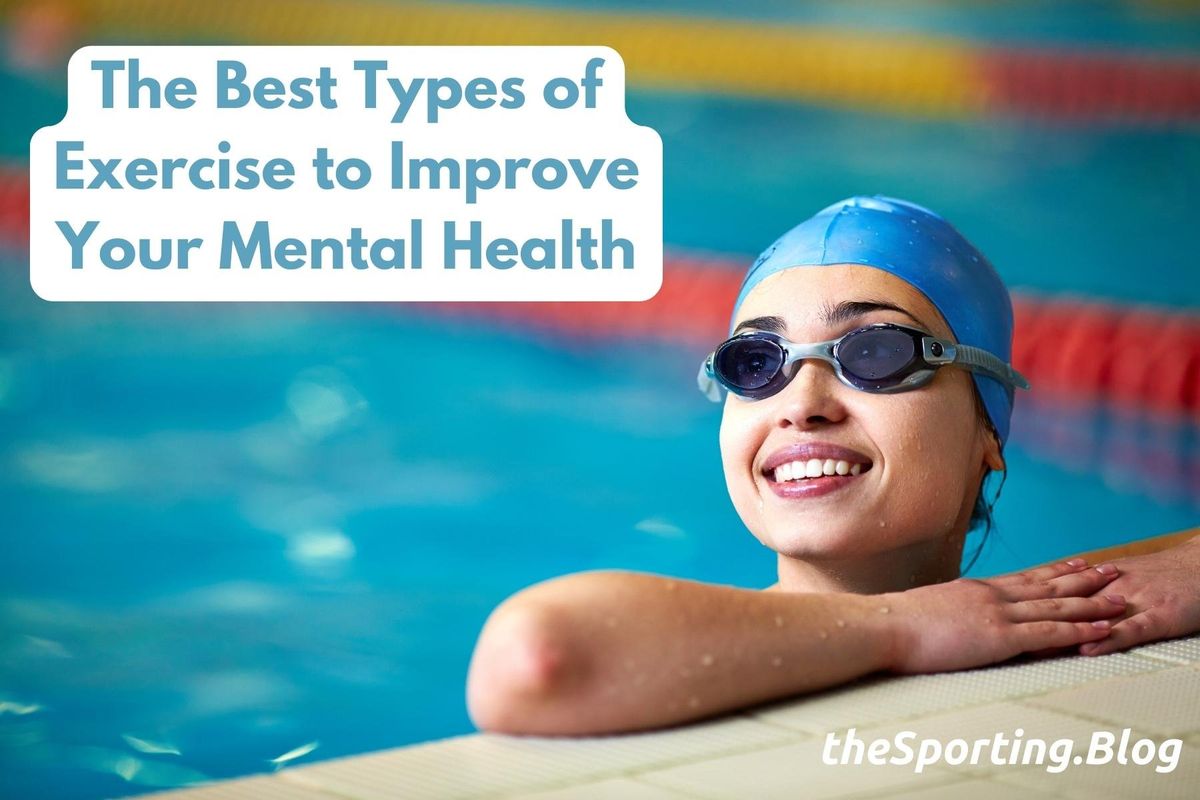
5. Swimming - Low Impact, Big Results
A lot of times, people with obesity and body dysmorphic issues find themselves struggling with self-esteem. Swimming can help your body lose excess weight and tone your muscles to instantly help you get better self-esteem and eventually prevent you from getting depressed.
Also, it is recommended that adding 45 minutes of cardio exercise such as Swimming or Skipping can increase your cardiovascular health.
6. Resistance Training - Fire the Muscles
When you are not feeling physically healthy and fit, your mind is looking out for ways to feel better. As a result, you are more likely to discourage negative behaviours such as addiction.
Our brain releases the chemical hormone dopamine naturally when we are performing different exercises. This is a chemical that acts as a reward hormone, and whenever we feed ourselves with something that stimulates the chemical, we feel an elevation in our mood.
You can engage in different Resistance Training sessions that are good for your body and mind. In addition, it also helps to improve endurance.
7. Strength Training - Grow Mentally and Physically
Your emotional intelligence is also significantly improved as you perform different exercises. For example, Strength Training activities such as lifting weights help to create balance and engage your core in the process.
This significantly improves your consistency and patience over time; both factors are essential for improving emotional intelligence.
Also, as your body gets stronger, you will feel more confident in your clothes and increase the ‘spring in your step’.
8. Dancing - Have Some Fun with Your Exercise
Simple exercise, such as dancing for mental health, is great for supplying essential nutrients to the brain, which is important for shedding degenerated cells and paving the way for new, healthier cells.
When this cell turnover takes speed, the brain increases the potential of forming new memory cells that ultimately assist in creating new memories and help in the prevention of memory-related problems such as dementia and Alzheimer’s disease. Therefore, it is recommended for older people to include exercise such as dancing in their daily routine to help prevent early memory loss.
Dancing is also good for removing negativity from your mind, which can also be a leading cause of low moods and introspective thoughts.
9. Aerobic Exercise - Get the Lungs Working
Aerobic exercises are good for increasing heart rate and blood circulation. Breathing and heart rate are essential components when we talk about fitness. Therefore, if you want to decrease depression, you could try something like biking. Not only is it perfect for getting around, but it also makes you healthy and fit. Other aerobic exercises that you can try are playing tennis, taking a brisk walk, and jogging.
10. Tai Chi - Practice the Poses
Trying Tai Chi poses will help to improve flexibility and balance. There are many poses that you can try, such as head down, head up, shoulder roll, and more.
Tai Chi is generally low impact, and there are many different classes and intro sessions you can try on YouTube. It is often recommended to people coming back from brain injury, as it is stimulating yet gentle on the body and helps to restablish balance and poise.
However, make sure that you are aware that before you try these poses, it’s essential to warm up first to avoid any kind of injuries.
Unlocking Mental Wellness: Try These Exercises to Boost Your Brainpower
To conclude, exercise for mental health comes with some amazing benefits which make physical activity an integral part of ensuring better mental health in all regards.
Just moving for 15-20 minutes a day can make the world seem a brighter and more postive space, so why don’t you give one of the above a go today, and let us know how you get on.
As you work on improving your mental health through different mind and behaviour techniques, it is essential you don’t forget to use exercises as an integral tool as well.



Comments ()